 Based on over 170 Google Reviews
What Is OEM Certification & Why Does It Matter for Your Vehicle?
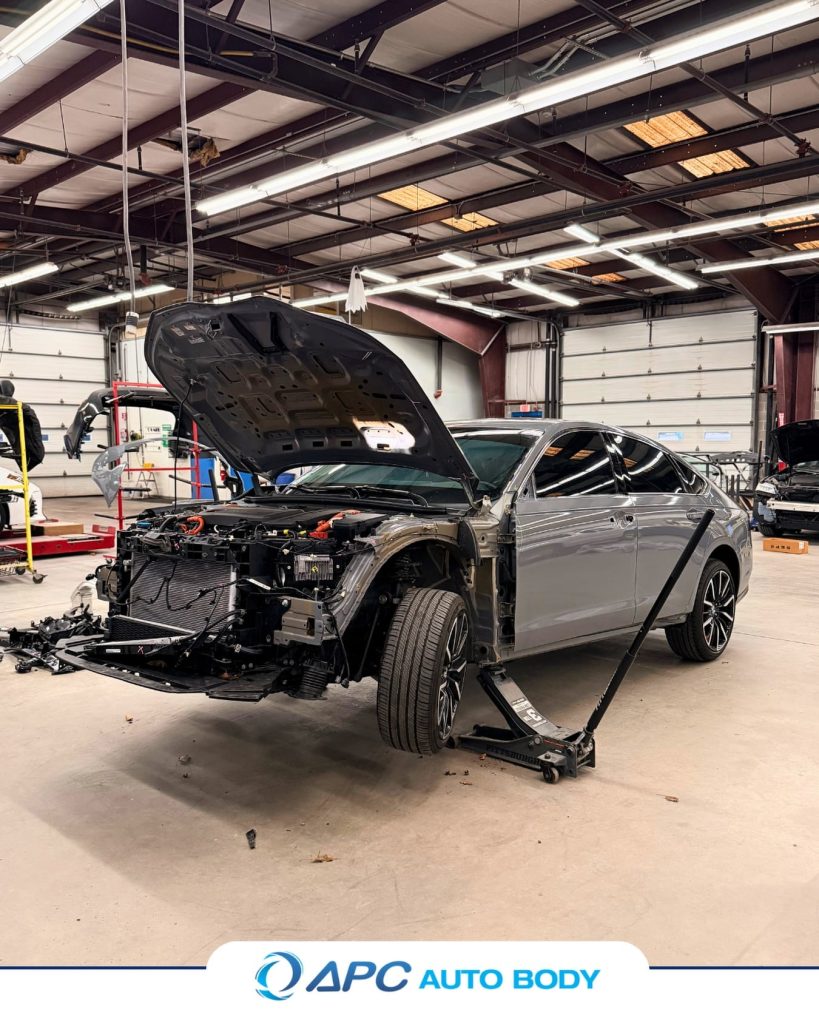
After an accident, choosing the right OEM-certified auto body shop is critical to the quality of your vehicle’s repair. Auto body and collision repair work affects far more than appearance. Repairs directly impact safety systems, structural integrity, and your vehicle’s overall performance.
OEM certification helps distinguish certified shops that follow manufacturer standards from non-certified shops that may not. Understanding what OEM certification is and why OEM certification matters can help you make a more informed decision when your vehicle needs auto collision repairs.
What Is OEM Certification in Auto Body Repair?
OEM stands for original equipment manufacturer. In auto body and collision repair, OEM certification means that a vehicle manufacturer has formally approved a body shop to repair specific makes and models in accordance with factory standards.
An OEM-certified repair shop meets strict requirements set by automakers. These requirements cover technician training, equipment needed, repair facilities, and adherence to OEM repair procedures and manufacturer specifications. Certification confirms that repairs follow factory-approved procedures designed to restore a vehicle to pre-accident condition.
Unlike non-certified shops, OEM-certified shops must follow OEM guidelines, use factory-approved parts, and apply the exact repair procedures outlined in the OEM certification program. These standards are published and enforced by manufacturer-approved programs within the automotive industry.
Because each vehicle brand has its own certification programs, many auto body shops pursue multiple certifications to safely and accurately support different vehicles, technologies, and advanced technology systems.
What Does OEM Certification Include?
An OEM certification program requires repair facilities to meet ongoing standards set by vehicle manufacturers. These requirements focus on consistency, accuracy, and safety throughout the repair process.
To stay certified, OEM-certified shops must demonstrate:
- Required training and specific training for technicians, including regular updates as vehicles and advanced technology change
- Use of OEM parts, including genuine parts and factory-approved parts, instead of aftermarket parts
- Access to the right tools and equipment needed to follow manufacturer standards
- Compliance with documented OEM repair procedures, repair procedures, and OEM specifications
- Routine audits to confirm shops are staying certified and following OEM standards
Because OEM certification requires strict adherence to the manufacturer’s specifications, each automaker maintains its own certification programs. This means repair shops may hold multiple certifications to support different makes and models and evolving safety systems.
These standards help ensure repair quality remains consistent from one repair job to the next, regardless of vehicle complexity.
Why Is OEM Certification Important?
Your vehicle is built to meet precise manufacturer standards, particularly in vehicle safety, performance, and long-term reliability. When repairs don’t follow OEM guidelines, even minor deviations can affect how your vehicle performs after an accident.
Choosing an OEM-certified repair shop helps protect several critical areas:
Vehicle Safety and Performance
Modern vehicles rely on integrated safety features, safety protocols, and safety systems that must be restored according to factory specifications. OEM-certified repairs adhere to the manufacturer’s specifications and are designed to preserve the vehicle’s safety and performance.
Correct Parts and Repair Methods
Certified repairs use OEM parts that match the vehicle’s original design. This reduces the risks associated with aftermarket parts and non-certified repairs.
Protection of Structural Integrity
Collision damage can compromise structural integrity if repairs aren’t completed according to the exact repair procedures. OEM repair procedures are developed to restore strength, alignment, and crash protection.
Warranty and Long-Term Value
Following OEM certification guidelines supports warranty protection, preserves your vehicle’s factory warranty, and protects resale value. Repairs completed outside manufacturer-approved programs may lead to complications later.
For many drivers, OEM certification provides confidence that repairs were completed in accordance with factory standards set by the automotive industry.
Is OEM Certification the Same as Being Insurance-Preferred?
No. OEM certification and being insurance-preferred are not the same, and the difference matters for repair quality.
An insurance-preferred collision repair shop has an agreement with insurance companies. These programs focus on cost control and turnaround time, not necessarily on OEM guidelines or manufacturer standards. In some cases, insurers may recommend aftermarket parts, alternative repair procedures, or shortcuts that don’t align with factory specifications.
An OEM-certified repair shop, on the other hand, follows manufacturer-approved programs established by vehicle manufacturers. These programs prioritize the vehicle’s safety and structural integrity and restore the car to its pre-accident condition using factory-approved procedures.
At APC Auto Body, we work for you, not the insurance company. Our focus is on performing OEM repair work that adheres to OEM standards, even when that means pushing back to prioritize certified repair over convenience or cost.
Understanding this distinction helps you advocate for repairs that protect your vehicle’s original design, safety systems, and long-term value.
APC Auto Body: Your OEM-Certified Repair Partner
At APC Auto Body, OEM-certified auto body repair is about doing the job the right way, every time. We maintain OEM certification through ongoing required training, investments in advanced technology, and strict adherence to vehicle manufacturers’ standards.
We equip our repair facilities with the necessary tools and equipment to adhere to OEM repair procedures and factory specifications. That allows our technicians to perform repairs that support vehicle safety, restore structural integrity, and protect overall repair quality.
When you work with an OEM-certified repair shop like ours, you can expect:
- Repairs completed using OEM parts
- Technicians with specific training aligned to manufacturer-approved programs
- Repairs that follow exact repair procedures and OEM guidelines
- A focus on restoring vehicles to pre-accident condition
We also help you understand your repair options and navigate the claims process without compromising OEM standards. Our goal is simple: protect your vehicle’s original design, performance, and long-term reliability.
Choose an OEM-Certified Auto Body Shop After a Collision
After an accident, it’s easy to focus on speed or cost. Choosing an OEM-certified auto body shop keeps the focus where it belongs—on safety, accuracy, and long-term reliability.
Repairs completed by an OEM-certified repair shop adhere to manufacturer standards, factory specifications, and OEM guidelines to protect vehicle safety, structural integrity, and performance. This approach also supports warranty protection, preserves your vehicle’s factory warranty, and protects resale value.
While many auto body shops perform collision repairs, not all follow manufacturer-approved programs or use factory-approved parts. Choosing OEM-certified shops helps reduce the risks associated with non-certified repairs, aftermarket parts, and inconsistent repair procedures.
OEM certification is crucial for drivers seeking assurance that their vehicle’s repairs align with its original design.
Schedule an OEM-Certified Repair Estimate
If your vehicle needs collision repair, choosing an OEM-certified auto body shop helps protect vehicle safety, repair quality, and long-term value. Working with an OEM-certified repair shop gives you confidence that repairs follow manufacturer standards and factory-approved procedures.
At APC Auto Body, we’re happy to answer questions, explain your repair options, and help you understand what OEM certification means for your vehicle.
Call us at (508) 998-9820 or request an appointment online to schedule your estimate and speak with our team.
